
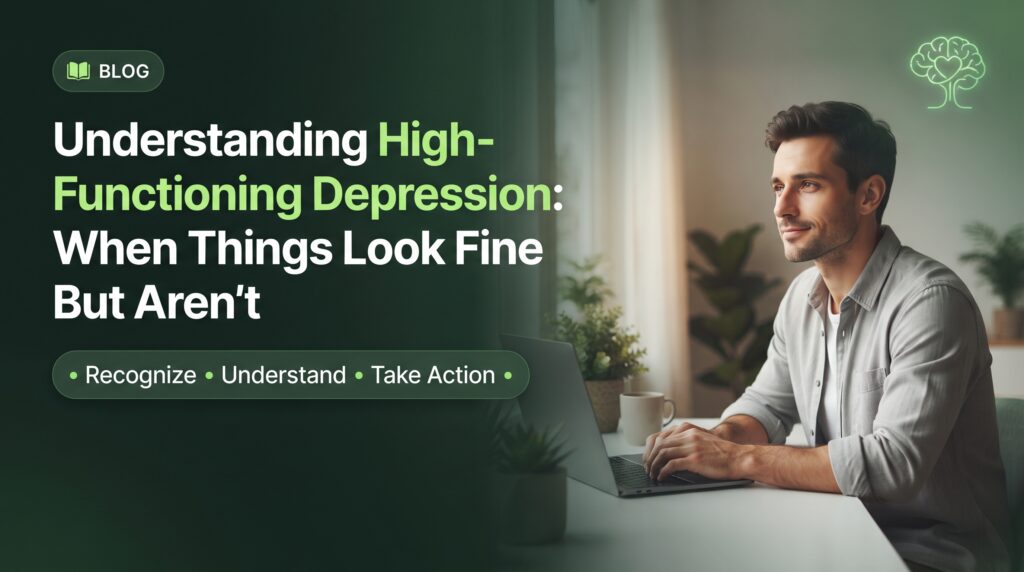
A person who has a busy job and a full timetable usually does not appear to be someone who requires therapy for depression. In fact, high-functioning depression is often concealed by that very outward appearance; they go to work, keep their appointments, and smile at the appropriate moments. Yet inside, they might feel numb or empty.
It is easy to overlook the difference between a person’s appearance and how they actually feel.
What High-Functioning Depression Looks Like
It isn’t true that depression always involves staying in bed; for a great many people, it means carrying on with each task, even though nothing anymore gives any satisfaction, not even good things.
Some signs of high-functioning depression include:
- Going through the motions, not feeling present
- Low energy, even after rest
- Trouble enjoying things you used to like
- Irritability that feels out of character
- A quiet sense of emptiness under a busy life
These signs are slight. It is often thought that they are merely due to someone being tired or under stress. In some cases, this is correct. In other cases, it is something more profound.
Why It Gets Overlooked
Those individuals who have this type of depression are usually the ones that other people count on; they keep their promises and turn up when their children need them, which leads people to think that all is well.
Depression of this type is usually accompanied by anxiety. A great many people keep themselves busy to prevent feeling low. The two conditions tend to occur together. Because of this, it becomes more difficult to identify what is actually happening.
Coping With Depression Day to Day
The idea that you have to wait for things to go wrong to cope with depression is a misconception; small steps are of assistance, even when therapy is being received.
A few things that often help:
- Instead of trying to ignore them, recognizing difficult emotions can be an important first move in dealing with them
- It might also be helpful to keep simple routines, for example by taking a daily walk, as this can give a feeling of consistency and stability
- Contacting someone you trust can provide emotional support, and by noticing patterns
- Such as certain times of day when your emotions tend to be more difficult. You can gain a better understanding of your own experiences
Even though this approach is not a cure, it could offer temporary relief and make it easier to manage difficult feelings.
When to Seek Help for Depression
A great many people delay in getting in touch. It is a frequent question what time one should ask for help about depression. The straightforward answer is that you should do so earlier than you suppose.
If you’re experiencing a low mood that has continued for more than a couple of weeks, get in touch. You should get in touch if it is affecting your work or your relationships. You should also get in touch if you feel emotionally flat, even when things are going well.
If you ever find yourself feeling hopeless or thinking about not wanting to be in this situation, get in touch with a professional or a crisis line right away since these feelings require immediate support.
How Therapy Helps
You get a safe environment in which you can be honest about your feelings without feeling like you have to pretend all is well or remain composed. The therapist assists you in discovering the origins of your depression; this could be linked to a life change, continuous stress, or past trauma.
Treatment usually involves identifying unhelpful thought patterns and creating small, maintainable routines. Over time, this kind of work enables people to go from merely functioning to actually feeling like themselves again.
Depression Counseling in Forest Grove
When Forest Grove residents want to seek depression counseling, they usually begin with one simple insight: things have been difficult for a while and trying to cope on their own is no longer working.
That fact should not be regarded as a failure; it is usually the first genuine step in getting better.
Conclusion
High-functioning depression seldom makes itself known; it conceals itself behind full schedules and appearances that look completely normal. The fact that someone seems capable on the outside does not mean that they are all right inside. If you’ve noticed a kind of quiet numbness beneath the busyness of your life, then it’s important to take notice of it and not ignore it. Usually, seeking help earlier, before the situation becomes unbearable, means the way back to feeling like yourself is both shorter and steadier.
Are you ready to speak to someone?
You needn’t endure the situation all by yourself if you’ve simply been going through the day without being closely involved in your own life. Iridescent Forest Counseling provides individual therapy to deal with depression, anxiety, and the quiet exhaustion that comes from trying to look after everyone else. You and your therapist will proceed at a pace that makes you feel safe, enabling you to move from just getting by to actually becoming present again. Our sessions can be held in person in Forest Grove or via telehealth throughout Oregon. Make the first move towards positive change by getting in touch with us now to arrange a consultation and find out how IFC might be able to assist you.
Frequently Asked Questions
What is the difference between high-functioning depression and ordinary depression?
Both situations involve low mood and exhaustion. However, a person with high-functioning depression is still able to carry on with everyday life, which can make it more difficult to notice or take the condition seriously.
Can depression and anxiety occur together?
Certainly, they often occur together, and treating just one of them may leave something important unattended.
What is the usual duration of depression therapy?
It varies from person to person; some detect a change after a few months while others require longer-term support.
Do you need to take medication to treat depression?
It isn’t always the case that people need both; a great many manage just by having therapy. Some, however, choose to use both methods. The best course of action should be determined in consultation with a healthcare provider.