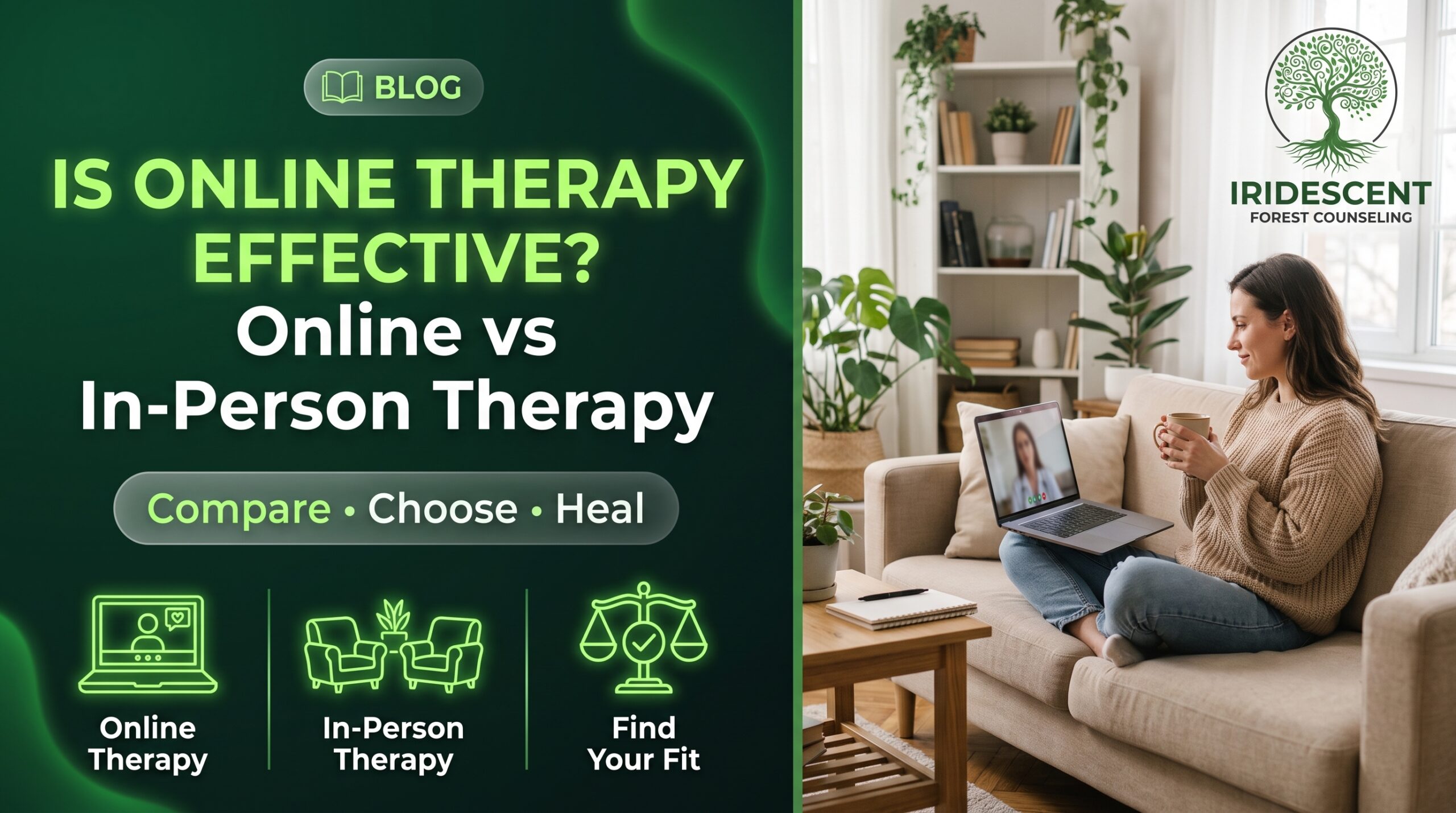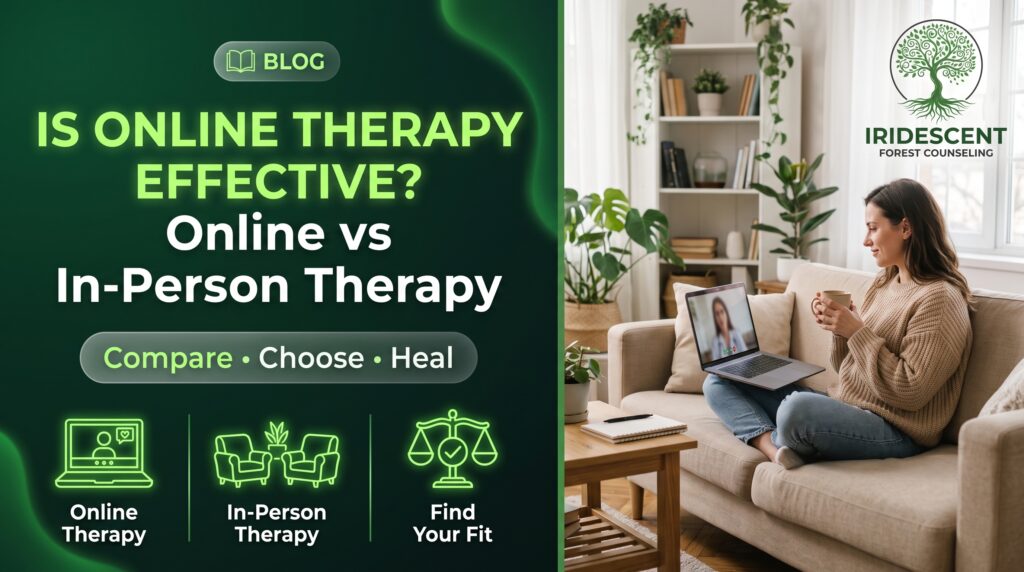
You’re at home, your coffee is getting cold, and you’re asking yourself: is online therapy effective, or is it just easier than going to an office? That’s a reasonable thing to wonder. It can feel strange at first to talk about personal parts of your life through a screen. But for many people, virtual therapy can still provide real support. A few things make the difference.
What the Research Says
Online therapy vs in-person therapy has been studied quite a bit. A 2018 meta-analysis in the journal Cognitive Behaviour Therapy pulled together 20 studies and more than 1,400 patients. It compared guided internet-based cognitive behavioral therapy with face-to-face CBT and found the two produced equivalent results overall. A 2022 meta-analysis of randomized trials found video therapy roughly comparable to in-person therapy for reducing depression symptoms. There’s a catch, though. Most of this research focuses on CBT, and few studies have compared the two formats for individual conditions, so more work is needed.
How It Actually Works
Wondering how does online therapy work? In most cases, you just use the secure link from your therapist to join the video appointment. Once you’re connected, it really isn’t that different from sitting in an office together. You talk about what’s been happening, your therapist listens, and you work through it as a team. Technology issues and privacy are the two things that tend to cause the most trouble, but they are usually manageable with a little preparation.
So What Is Teletherapy?
Teletherapy is just therapy by video or phone. Nothing mysterious. An APA survey in 2022 found that 96 percent of psychologists believed telehealth had proven its worth as a therapeutic tool throughout the complete duration of pandemic, so it’s no longer a fringe option. It isn’t a watered-down version of the real thing. It’s therapy, delivered differently.
The Upsides
The benefits of online therapy often come down to making life a little easier. You don’t have to drive across town, find parking, or sit in traffic trying to make it to an appointment. A proper session can fit into a lunch break, a quiet hour at home, or even after the kids finally go to sleep. It’s also helpful for people who live a long way from a therapist or have schedules that change from week to week. For many people, convenience is the main draw. And when getting to therapy is easier, you may be less likely to miss sessions, which can help keep your progress moving.
Where In-Person Can Win
Online therapy isn’t the right fit for everyone. Some people find it easier to pick up on small changes in body language when they are sitting in the same room with their therapist. An office can also offer fewer distractions than a busy home. For someone in crisis or dealing with severe symptoms, in-person care may be a better option. If you’re in immediate danger or thinking about harming yourself, call or text 988 or call 911 right away. Many therapists also use a mix of online and in-person sessions. In a 2022 APA survey, 58 percent of psychologists said they saw some patients in person and others remotely.
Teens, Parents, and Telehealth
Telehealth counseling can be a comfortable option for teens who are already used to spending time online. Being able to talk from a familiar place, like their bedroom, may make the first few sessions feel less intimidating. Before the appointment, parents can think through a few simple questions: Where will the session happen? Will my teen have enough privacy? What will we do if the internet connection drops? A quiet room with the door closed can make it much easier for them to focus.
When the concerns involve everyone at home, family therapy vs individual therapy is worth a look. It can help you decide whether one person or the whole family should take part in the sessions.
Common Worries
It can take a little while for online therapy to feel natural. Some people notice that it feels less personal at first, but that often becomes less of an issue over time. Worried about privacy? Therapists should use platforms that meet federal privacy requirements, and you can always ask which one they’ll be using. You may miss a few parts of being physically in the same room, but many people feel the convenience makes up for it.
Online or in an office, individual therapy sessions often follow a familiar flow. You check in, talk about what’s been going on, and work on something practical together. More than anything, the right therapist should be someone you feel comfortable talking to.
Making Online Work for You
Log on a few minutes before your appointment. Use headphones. Tell everyone at home you’re unavailable for an hour. Have a notepad nearby. Sit where you can’t be interrupted, even if it’s a parked car. Small touches go a long way.
Conclusion
Online therapy isn’t a lesser option. For many people, it works about as well as an office visit, and it’s easier to fit into real life. The best format is the one you’ll actually attend. Start where you feel comfortable.
Ready to Try Therapy Your Way? Contact Us Today
You don’t have to figure this out alone. Contact us at Iridescent Forest Counseling to talk about what format feels right. Jasmine, a Licensed Professional Counselor, offers in-person sessions in Forest Grove and telehealth sessions across Oregon. Book a free consultation, a 15-minute call to see if it’s a good fit.
Frequently Asked Questions
Is online therapy as effective as in-person?
For many common concerns like anxiety and depression, research suggests it’s comparable.
Is teletherapy private?
It should be. Ask your therapist what platform they use and how they protect your information.
What do I need for an online session?
A device, steady internet, a private spot, and headphones help.
Can teens do therapy online?
Yes, many do. Make sure they have a private space for the call.
When is in-person therapy a better choice?
It may be the better fit in a crisis, with severe symptoms, or if privacy at home is a problem.