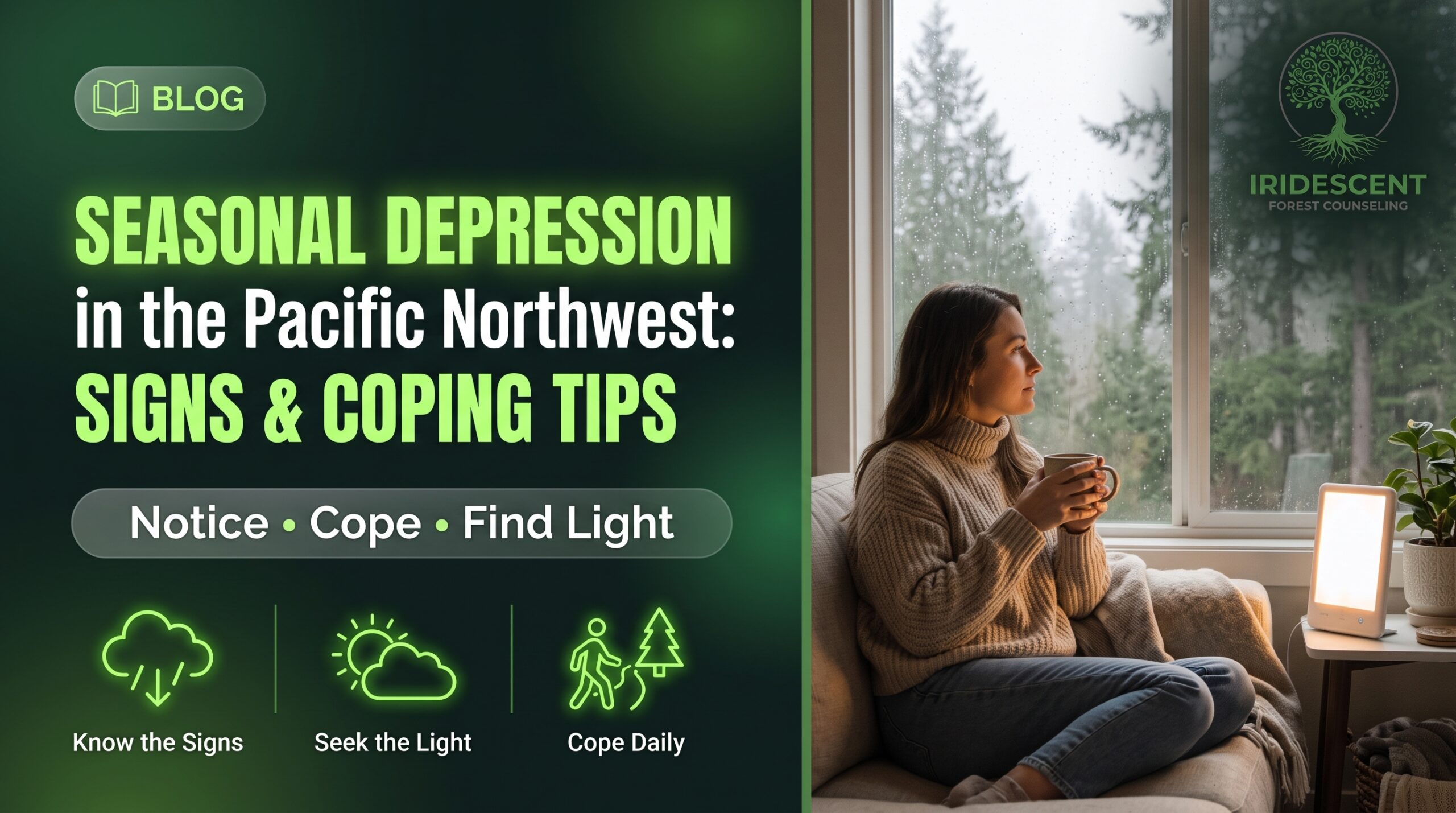
It’s late afternoon in November, the sky is already gray, and you find yourself wondering whether seasonal affective disorder (SAD) is creeping back in. You’re not just having a bad week. A lot of people in Oregon notice their mood change as the days get shorter and darker. Energy starts to disappear, motivation gets harder to find, and even everyday things can feel like more work. Here’s what to watch for, why Oregon can be a tough place during the darker months, and what may actually help.
Why the Pacific Northwest Feels It More
It may not be the rain that’s getting to you. The bigger issue could be how little daylight you’re getting. Shorter days can disrupt your body’s natural clock and affect chemicals such as serotonin and melatonin, both of which play a role in mood. Oregon State University says about 10 percent of people in the Pacific Northwest experience SAD, roughly twice the national average, while about one in four notice a lower mood during winter. And the gray weather doesn’t wait until December. In Oregon, it can start settling in as early as October and linger for months.
Signs of Seasonal Depression to Watch For
The symptoms often creep in during late fall rather than showing up all at once. Many are the same ones you see with other forms of depression: feeling low most of the day, losing interest in things you normally enjoy, having a hard time concentrating, or feeling hopeless or worthless. With the winter pattern, you may also sleep much more than usual, crave carbs, gain weight, and feel physically slow and weighed down. It’s a heavy, dragging feeling, as if your whole body is moving through mud. Some people still keep up with work, school, and daily responsibilities while feeling completely different inside. That’s similar to high-functioning depression, where everything looks fine from the outside but doesn’t feel fine underneath.
Seasonal depression can look different in children and teenagers. Instead of saying they feel down, they may become more irritable, struggle in school, pull away from friends, or spend much more time sleeping on weekends. It is easy for parents to see those changes as attitude or a phase. Sometimes that is not the whole story. One clue is when it happens. If the pattern returns during the same part of the year, it is worth paying attention.
Coping Tips That Actually Help
Start with light before you feel completely run down. Have your morning coffee near a bright window, and try to get outside for a walk early in the day, even when the sky is cloudy. Light therapy boxes are one of the standard treatment options, and starting one in early fall, before symptoms really settle in, may work best. A lot of people begin noticing changes within a few weeks. Talk with a doctor first if you have bipolar disorder or an eye condition.
Your daily routine matters, too. Try to keep your sleep and meal times fairly consistent. Get some movement in, even if it’s only a ten-minute walk. Make plans with people instead of waiting until you feel like socializing, since too much time alone can make winter feel harder. You don’t have to cut out sugar completely, but keeping it in check can help. Vitamin D is often suggested for winter mood changes, but the research on whether supplements actually help is limited, so it shouldn’t be your only approach.
When Therapy Makes Sense
Daily habits can only take you so far. When the symptoms keep hanging around, depression therapy can give you strategies that are useful long after winter ends. Cognitive behavioral therapy, in particular, has strong research supporting its use for SAD. And these days, you don’t always have to sit in an office to get that support. Many people work with a counselor through video.
Is online therapy sessions are an effective as in-person therapy? For common issues such as depression and anxiety, research suggests it can be. CBT guided by a therapist over video has produced results similar to traditional sessions in an office, including for teenagers.
Looking at the pros and cons of online therapy gives you a more realistic picture. Online care means no driving through rain or darkness, and appointments can be easier to fit around classes, work, or parenting. At the same time, your internet connection can be unreliable, finding privacy at home can be a challenge, and some people simply prefer being in the same room with their therapist. For others, a mix of online and face-to-face sessions makes the most sense.
As for how to prepare for a telehealth therapy session, don’t overthink it. Check the camera and microphone, find somewhere private, and keep your water and notes nearby. A closet or parked car can work when your house is noisy. Before you log on, write down the three issues you most want to discuss. Then join a few minutes early instead of rushing in at the last second.
For how to get the most out of online therapy, treat the appointment like any other important commitment. Attend regularly, be open about what is or isn’t helping, and follow through on the exercises your counselor gives you between sessions. Silence your phone and close anything on your computer that might pull your attention away. That time belongs to you.
Parents also ask, can teens do online therapy? Yes. Many teens are comfortable with video communication and adjust to the format easily. Help your teen create a private place for sessions, then check in afterward without demanding to know everything that was discussed. Younger children may need a parent close by to stay engaged and comfortable.
Conclusion
The gray season is long here, but it isn’t unbeatable. Spot the pattern early, get light each morning, lean on your people, and don’t wait out symptoms that last more than two weeks. Support is closer than it feels, and a video session from your couch counts as a real first step.
Ready to Feel Lighter This Winter?
At Iridescent Forest Counseling, Jasmine, a Licensed Professional Counselor, supports people who feel stuck in a seasonal slump. If you’re looking for therapy in Forest Grove, OR, she offers a warm, practical approach that moves at your pace, and telehealth is available across Oregon. Contact us at Iridescent Forest Counseling today and reach out for a free consultation.
Frequently Asked Questions
What’s the difference between the SAD and winter blues?
The winter blues are usually milder and tend to go away on their own. SAD is more persistent, can interfere with everyday life, and often comes back during the same season each year.
Does seasonal depression go away on its own?
Symptoms often ease as the seasons change. Treatment can help them lift sooner and make next winter easier.
When does it usually start?
It usually starts in late fall and builds through winter. It can begin in the teen years or adulthood, and it’s more common in women.
Can a light box replace therapy?
For some people, it’s enough. For others, it isn’t. A provider can help you decide.
When should I get help right away?
If you have thoughts of harming yourself, call or text 988. Don’t wait for an appointment.