You’re standing in the checkout line when panic attack symptoms seem to come out of nowhere. Your heart pounds, your hands start sweating, and your fingers feel numb or tingly. Someone is talking to you, but their voice seems far away. Maybe this has happened to you, or perhaps you’ve seen your teen suddenly go pale at the dinner table. However it happens, it can be frightening, and wanting some answers is completely understandable.
What a Panic Attack Feels Like
Fear can hit during a panic attack and build to a peak very fast. Within minutes, your body may react as if something dangerous is happening, with a pounding heartbeat, trembling, sweating, dizziness, or a tight sensation in your throat. You might also feel detached from yourself or as though things around you aren’t real. Some people become so frightened that they believe they’re dying. The strongest symptoms often pass within 20 to 30 minutes, but it can take a few hours to feel fully recovered.
Panic Attack vs Anxiety Attack
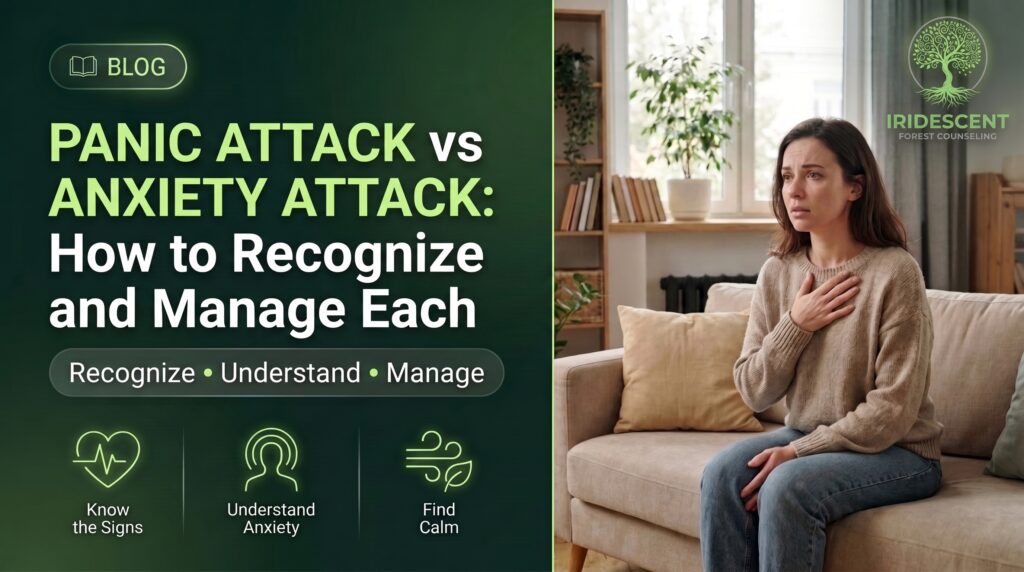
Ask ten people, and you’ll get ten answers on panic attack vs anxiety attack, so let’s clear it up. Clinicians use “panic attack” because the DSM-5 defines it. “Anxiety attack” isn’t a formal term at all. It’s just what most of us say when anxiety gets out of hand, and the experience behind it is real.
The simplest difference usually comes down to how quickly it happens. Panic can hit like a switch, sometimes without an obvious reason, and reach its peak within minutes. Anxiety is usually slower. It can build over hours or even days around something specific, like a Friday test, an uncomfortable meeting, or an argument with your sister. Neither experience is something you can simply think your way out of.
Anxiety can be surprisingly subtle. You may notice ongoing stomach problems, sleep that keeps getting worse, or a shorter fuse with the people around you. Looking at the signs of anxiety in adults can make those changes easier to recognize as part of a larger pattern. For teens, anxiety may show up through irritability or school avoidance instead of obvious worry.
What Causes Panic Attacks
There isn’t one simple explanation for what causes panic attacks. Genetics can play a role, along with long periods of stress and changes in how certain parts of the brain function. Add grief, a move, a difficult school year, burnout, or several stressful things happening at once, and the pressure can really build. Then, one ordinary Tuesday, your body’s alarm system suddenly goes off, even though you can’t point to one clear reason.
Younger people can experience the same thing. Kids and teens may be dealing with academic pressure, friendship issues, group messages that never stop, and emotions they don’t yet know how to describe. Instead of saying they feel panicked, they may say their stomach hurts or that they feel weird or wrong. That’s still information worth hearing.
Medical issues can also play a part. Thyroid problems and sleep disorders can cause panic-like symptoms, so a quick visit to your doctor is a smart first step.
Panic Attacks at Night
A panic attack at night is its own special kind of awful. You wake up sweating, heart pounding, certain that something is wrong, and the house is silent. These episodes can feel like a heart problem, which doesn’t help. They usually peak within a few minutes. People who get them at night often get them during the day too, so tell your doctor about both. Panic itself isn’t dangerous, but it’s still worth getting checked.
How to Stop a Panic Attack
If you want to know how to stop a panic attack while it’s happening, start by remembering that you don’t have to defeat it. You can guide yourself through it. Slow your breathing by inhaling for four counts and exhaling for six. After that, ground yourself with your senses by noticing five things you see, four things you can touch, and three things you hear. The goal is to stay with the moment instead of fighting the panic, since struggling against every sensation can sometimes make it worse.
When it’s over, give yourself a little recovery time. Sip some water and sit somewhere quiet. There’s no need to beat yourself up afterward. If you’re helping a teen, speak gently, keep your words short, and avoid saying, “Calm down.” Something like, “I’m staying right here. This will pass,” can be much more reassuring.
Chest pain that is new, severe, or doesn’t go away needs emergency attention. Don’t assume it’s anxiety or panic.
You can’t prevent every panic attack with lifestyle changes, but healthy routines may help lower your baseline stress. Try keeping a regular sleep schedule, eating real meals, getting some enjoyable movement, and watching your caffeine intake. Too much caffeine can cause a pounding heart and trembling that may feel very similar to panic. Cutting back for a week can help you see whether it’s making a difference.
When It Might Be Panic Disorder
Having one panic attack doesn’t automatically mean you have panic disorder. That diagnosis usually involves repeated, unexpected attacks along with an ongoing fear of having another one, or changes to your routine to avoid places or situations that might trigger you. Maybe you stop taking the bus, avoid the grocery store, or stay away from certain hallways at school. Only a licensed professional can make the diagnosis, but noticing that pattern matters.
There’s also plenty of room for hope. Cognitive behavioral therapy, medication, or both may reduce how often attacks happen and how intense they feel. For many people, anxiety therapy helps make those frightening physical sensations easier to understand. As you learn the skills and practice them, the fear around panic can gradually lose some of its hold.
Conclusion
Panic feels huge in the moment, but it passes, and it responds well to support. Knowing how it differs from everyday anxiety is a solid first step. You don’t have to white-knuckle this alone.
Ready to Feel Steadier?
Contact us at Iridescent Forest Counseling to talk about what you’ve been dealing with. A free 15-minute consultation is a low-pressure way to see if it’s a good fit. If you’re ready for counseling in Forest Grove, contact Jasmine today. Use the contact form.
Frequently Asked Questions
Can a panic attack hurt me?
Not directly. They’re miserable, but they aren’t considered dangerous. Still, symptoms can mimic heart trouble, so it’s smart to get checked the first time.
How long does a panic attack last?
It usually peaks within minutes and fades in about 20 to 30 minutes. You may feel drained afterward.
Is an anxiety attack the same thing?
Not officially. “Panic attack” is the clinical term, while “anxiety attack” is everyday language.
Can kids and teens have panic attacks?
Yes. They often describe stomachaches, a racing heart, or feeling weird.
When should I see a professional?
See someone when attacks keep coming back, you dread the next one, or you’re avoiding places you used to go.