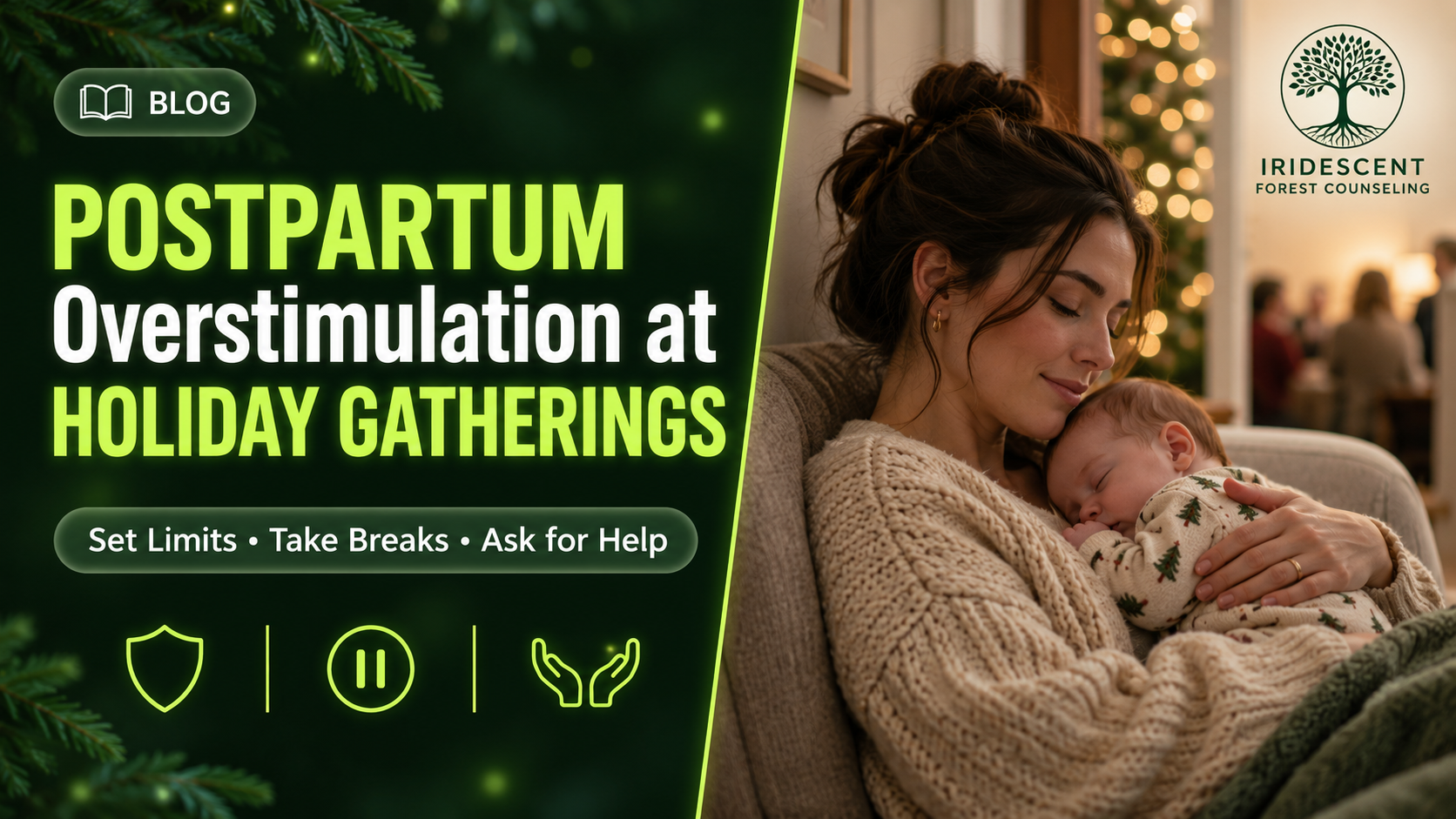
You’re trying to hear someone explain where to put the diaper bag. A cousin is leaning over to look at the baby, the TV is loud, and someone behind you is asking whether you’ve had a chance to eat. You wanted to see everyone. Now you’re considering spending the rest of the visit in the car.
Postpartum overstimulation is an everyday way to describe feeling overloaded by sound, touch, conversation, or competing demands after having a baby. A living room you enjoyed last year may feel different when you’re recovering, caring for a newborn, and trying to follow a conversation on broken sleep.
Notice the moment you start to feel crowded
Name the particular thing that’s hard for you. Someone might be comfortable with music but overwhelmed when three people ask questions at once. Another parent might find repeated requests to hold the baby tiring. You may be fine until you realize there’s nowhere comfortable to sit, eat, or feed the baby.
Before a gathering, recall the last visit that wore you out. How far into it were you? Had you eaten? Did you have a place to step away without asking someone for a key or moving a pile of coats? An answer like “I can manage the first hour if I know where to go for a break” is useful.
Notice your first signs. You might lose track of a conversation or get sharp when someone asks a routine question. If you’re waiting until you’re certain you need to go, you may be making the decision when it’s hardest to speak up.
Set a time you can leave
Tell your host what you expect to manage. “We’re aiming to come by from one to two. If the baby or I need a break sooner, we’ll head home.” Giving a range gives your host some information and gives you room to respond to how the visit is going.
Decide beforehand whether you want to arrive when the house is quiet or join for one specific part, such as dessert. If you’d like to see an older relative one-on-one, ask whether they’ll be there a little early. You might get the conversation you hoped for without staying through the busiest stretch.
Make leaving simple. Park somewhere accessible. Keep coats and the diaper bag together. If you’re sharing a ride, agree on what to do if one adult wants to go sooner. You can thank your host, say you’re heading out, and keep the explanation short.
Ask for a quiet space before you need it
Check whether there’s a room you can use to feed the baby, take a breath, or sit without conversation. Ask where it is and whether you’re free to use it when you arrive. If the space doubles as coat storage, find out whether there’s a quieter alternative.
A break can be as simple as sitting with your feet on the floor and drinking water. You might want your partner or another trusted adult with the baby while you step out. On another day you might prefer to take the baby with you. Share the version that would actually help.
Consider whether the quiet room is somewhere guests will follow you. If needed, ask your host to direct people away for a few minutes. “I’m going to feed the baby and have a little quiet time. I’ll come find you when I’m ready” tells people what to expect.
Give the other adult an actual job
If you’re going with a partner, friend, or family member, pick a responsibility they can handle from start to finish. They might carry the bags, tell relatives when it’s a good time to visit, bring you a plate, or say goodbye to the host while you get settled for the ride home. Agree on one discreet cue that means you’re ready to take a break.
Talk through baby-holding before the gathering if you know it will come up. “We’re going to keep her with us while she settles” works as a short answer. If you’d like people to hold the baby, you can still decide how long and ask for the baby back whenever you’re ready. A helper can repeat the plan if you’ve answered the same question several times.
Parents attending solo can ask the host or a trusted guest to take one task. The request can be specific enough to accept easily. “Could you save me a seat on the edge so I can get up when I need to?” If asking for help has become a broader struggle during this change, women’s mental health support offers space to talk through the expectations you’re carrying.
Check how you feel on ordinary days too
Give yourself time to settle when you get home. If you and your partner want to review what happened, do it after you’ve both had a chance to eat or rest. Decide whether the issue was the length of the visit, the noise, the number of people, or being responsible for too many things at once.
If distress keeps coming up outside gatherings, talk to your obstetric or primary care clinician. The American College of Obstetricians and Gynecologists explains when to ask for help with postpartum mood symptoms. You can also read about postpartum therapy to get a sense of what you could discuss in counseling.
You can contact Iridescent Forest Counseling if you’d like to ask about care. For the next visit, choose one change. Perhaps you want relatives to come in pairs so you don’t have to pack for an outing. Perhaps you’d rather meet one person for a walk, where you can end the conversation whenever you’re ready.
Frequently Asked Questions
Why do gatherings feel overwhelming after having a baby?
A gathering can bring loud conversation, interruptions, and the work of caring for a baby into the same room. Recovery and interrupted sleep can add to how demanding that feels. Notice the part you can most easily change, such as how long you stay.
How do I plan quiet breaks with a newborn?
Ask the host about a room you can use, and check the location as soon as you arrive. Decide whether you want someone to look after the baby briefly or whether you’ll bring the baby with you. Take the break when you first notice you need it.
How can my partner help when I’m overstimulated?
Ask them to own a specific task, such as checking in with the host or making sure you have a clear route out. Agree on a word or text you can send if you’d like them to step in. Talk it through before you’re in a crowded room.
Can a short holiday visit work with a newborn?
Yes. Tell your host when you expect to arrive and how long you plan to stay. Choose the part of the gathering you’d most like to attend, and make an earlier exit possible if the day takes more energy than you expected.
What should I bring to a noisy family gathering?
Bring the supplies you normally use for a short outing with the baby, plus water or a snack for yourself if practical. Check whether there’s a quieter place nearby. A familiar plan for getting home can matter as much as what’s in the bag.