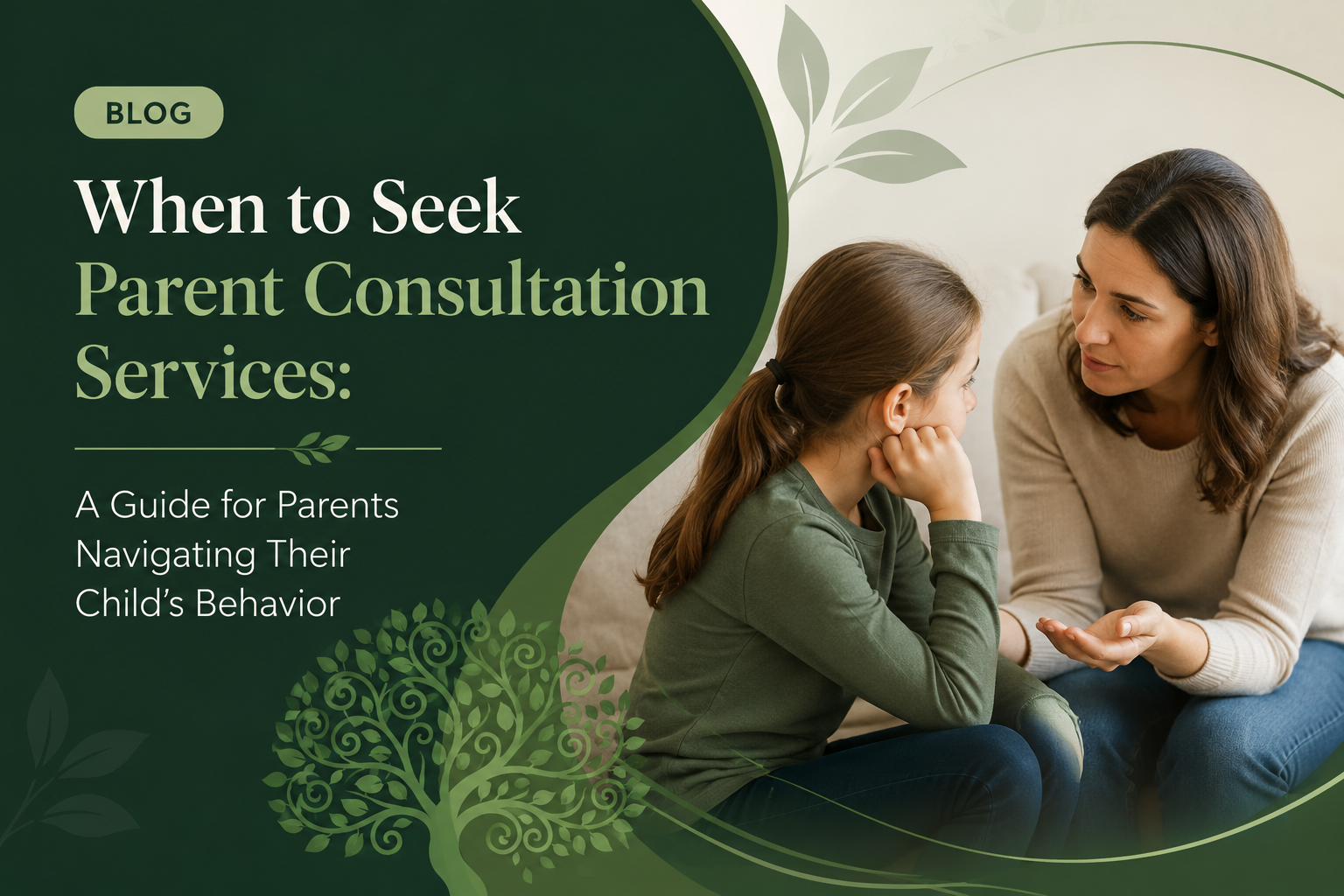
Parenting rarely comes with a manual, and even the most attentive caregivers hit moments where they simply don’t know what to do next. Maybe your child has started pulling away, a school is calling more often than you’d like, or the strategies that used to work at home suddenly don’t anymore. If any of this sounds familiar, you’re not failing as a parent – you may just need a dedicated space to think things through with support. That’s exactly what parent consultation services are designed for.
Unlike a full course of family therapy, a parent consultation is a focused, parent-only session that gives you room to talk openly about what’s happening at home, in school, or in your child’s inner world, without your child present. It’s one of the most practical yet underused resources available to families today, and more parents are turning to it as a first step before – or alongside – therapy for their child.
What Exactly Is a Parent Consultation?
A parent consultation is an individual session for a parent or caregiver, separate from any therapy your child may be receiving. Think of it as a collaborative planning space: a place to unpack your concerns, get outside perspective, and walk away with practical next steps.
These sessions are especially useful for caregivers of tweens and teens, since this developmental stage often brings a wave of new behaviors, moods, and independence that can catch parents off guard. But consultation work isn’t limited to any one age group – it can support parents at almost any stage of their child’s development.
Common reasons parents book a consultation include:
- Wanting guidance on parenting approaches that actually fit their family
- Trying to understand a child’s experiences outside the therapy room
- Navigating a big transition – divorce, a move, a new school, a blended family
- Reinforcing progress a child is already making in their own therapy
- Feeling overwhelmed, unsure, or simply out of ideas
Signs a Parent Consultation Might Help
You don’t need a crisis to justify getting support. Some of the clearest signs it’s time to reach out include:
You’re seeing behavior changes you can’t explain. Withdrawal, irritability, sleep changes, or a sudden drop in school performance can all signal something deeper is going on – and a consultation helps you figure out what questions to even ask.
Old strategies have stopped working. What calmed a meltdown at age seven might do nothing for the same child at thirteen. Parenting has to evolve as kids do, and a consultation helps you adjust in real time.
You and your child feel disconnected. If conversations feel strained, short, or like they always end in conflict, a consultation can help you understand what’s driving the distance and how to rebuild trust.
School or social conflicts keep coming up. Repeated calls from teachers, peer conflicts, or reports of your child struggling socially are worth exploring together, especially if you’re unsure how much to intervene.
You feel like you’re carrying it all alone. Caregiver stress is real, and it doesn’t need to reach a breaking point before it’s worth addressing. A consultation gives you a space that’s entirely about you and your role, not just your child’s symptoms.
How a Parent Consultation Differs From Family Therapy
This is a distinction worth understanding, because the two serve different purposes. Family therapy typically involves multiple family members working through dynamics together in the room. A parent consultation, by contrast, is just you – the caregiver – meeting one-on-one to reflect, problem-solve, and gain clarity, often as a complement to a child’s individual work rather than a replacement for it.
Many families find that combining approaches works best: the child has their own therapeutic space, while the parent has a separate outlet to process, ask questions, and stay informed about how to support what’s happening in session, without stepping on the child’s privacy or therapeutic relationship.
What to Expect From the Process
A good parent consultation is built on a client-centered, strengths-based foundation. That means the focus isn’t on judging your parenting or handing you a rigid script – it’s on listening closely to your family’s specific values, challenges, and goals, then building strategies around them.
Sessions often draw on a blend of approaches, including:
- Mindfulness-based strategies to support calmer, more regulated interactions at home
- Cognitive behavioral tools to identify unhelpful thought patterns affecting family dynamics
- Expressive techniques for moments when talking things through feels too hard
- Motivational interviewing to build confidence and momentum toward change
- Client-centered care that keeps your family’s voice and values at the center of every conversation
Sessions typically run 45–50 minutes and are scheduled around what your family actually needs, whether that’s a single check-in or ongoing support during a difficult stretch.
Frequently Asked Questions About Parent Consultations
Do I need to already have a therapist for my child to book a parent consultation?
No. Many parents reach out for a consultation before their child ever starts therapy, simply to get guidance on what to do next. Others use it alongside their child’s ongoing sessions to stay aligned on strategies at home.
Is a parent consultation confidential?
Yes. Your consultation sessions are your own space to speak freely. If your child is also in therapy, any coordination between sessions is handled thoughtfully and ethically, always with your child’s trust and privacy in mind.
How many sessions will I need?
It depends entirely on what you’re working through. Some parents come for a single session to get unstuck on a specific issue, while others prefer ongoing monthly check-ins during a longer transition. Sessions are scheduled around your goals, not a fixed program length.
What ages does this support cover?
While parent consultations are especially common for caregivers of tweens and teens navigating new independence and social pressures, the approach can be adapted to support parents of children at nearly any developmental stage.
What if my partner and I don’t agree on parenting approaches?
This comes up more often than you’d think. A consultation can be a neutral space to talk through differing parenting styles and find common ground that still feels authentic to both of you.
The Cost of Waiting vs. the Value of Support
It’s tempting to tell yourself the situation will resolve on its own, or that reaching out means admitting something has gone wrong. Neither is true. Behavioral shifts, communication breakdowns, and caregiver burnout tend to compound the longer they go unaddressed – a rough patch can quietly become a pattern. Getting support early isn’t about crisis management; it’s about giving yourself the tools to respond with confidence before small struggles grow into bigger ones.
Think of a parent consultation the way you’d think of any other kind of expert guidance: you wouldn’t wait until a minor car issue became a breakdown to see a mechanic, and you don’t need to wait until things feel unmanageable to talk to someone who understands child development and family dynamics. A single session can shift how you see a situation entirely.
You Don’t Have to Figure This Out Alone
Every family hits a point where outside perspective helps more than another late-night search for answers. Whether you’re managing a specific behavior concern, trying to support a child already in therapy, or just feeling stretched thin as a caregiver, a parent consultation offers a steady, judgment-free space to regroup and move forward with a clearer plan.
At Iridescent Forest Counseling, parent consultations are grounded in collaboration, reflection, and genuine respect for your family’s experience – not a one-size-fits-all approach. If you’re a parent or caregiver in Forest Grove, Hillsboro, Beaverton, Tualatin, Tigard, North Plains, Portland, or anywhere in Washington County, Oregon (telehealth is also available), support is closer than it might feel right now.
Ready to take the first step? Schedule a parent consultation with Iridescent Forest Counseling today and start building a clearer, more confident path forward for your family.